
In October 2026, Tip of the Mitt Watershed Council and project partners brought together 27 shoreline contractors at Aloha State Park on Mullett Lake for a hands-on Certified Natural Shoreline Professional (CNSP) training. Together, participants restored 67 feet of eroding shoreline using natural materials and techniques designed to protect water quality, improve wildlife habitat, and increase shoreline resilience.
The project serves two purposes: providing contractors with practical experience in natural shoreline restoration and creating a demonstration site where park visitors can see these techniques in action.
Why Natural Shorelines Matter
Healthy shorelines are an important part of healthy lakes. Native plants and their root systems help hold soil in place, absorb runoff, filter pollutants, and provide habitat for fish, birds, pollinators, and other wildlife.
When shoreline vegetation is removed or replaced with lawns, seawalls, or other hardened structures, these natural benefits can be lost. Waves and runoff can carry sediment and nutrients into the water, affecting water clarity, aquatic habitat, and overall lake health.
Natural shoreline restoration offers an alternative that works with the lake’s natural processes. By combining vegetation with carefully selected erosion-control materials, these approaches can help protect shorelines while maintaining the connection between land and water.
Restoring the Shoreline at Aloha State Park
The restoration focused on 67 feet of eroding shoreline along Mullett Lake. Because large inland lakes experience significant wave action and seasonal ice, the project used a combination of strategically placed stone, biodegradable erosion-control materials, and native vegetation to create a more stable and resilient shoreline.
The restoration involved several key steps:
1. Establishing a Stable Foundation
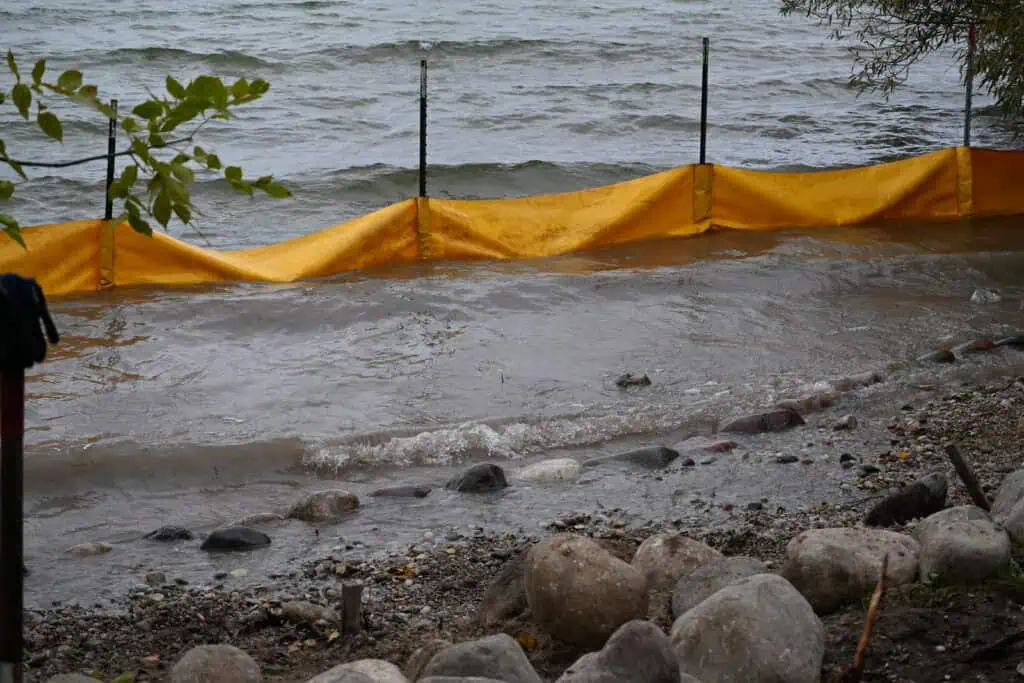
Contractors began by excavating a shallow trench along the shoreline to install a row of large foundation stones, known as toe stones. These stones were partially buried in the lake bottom to create a stable base for the restoration and help protect the shoreline from erosion caused by waves.
2. Building the Stone Revetment
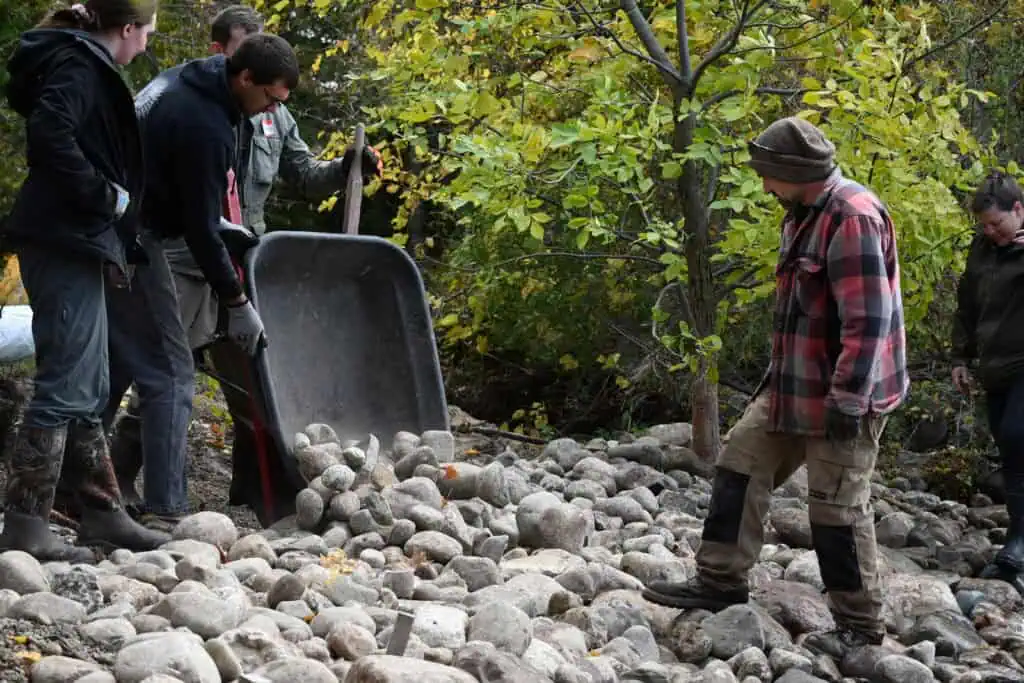
Next, large fieldstones were positioned to form a gently sloping, interlocking stone structure called a revetment. Contractors then installed a layer of smaller stone and gravel to fill in the area between fieldstone and help prevent waves from washing away underlying soil.
Unlike a vertical seawall, this sloped structure helps dissipate wave energy while providing a stable foundation for the restored shoreline.
3. Installing Coconut Fiber Blankets
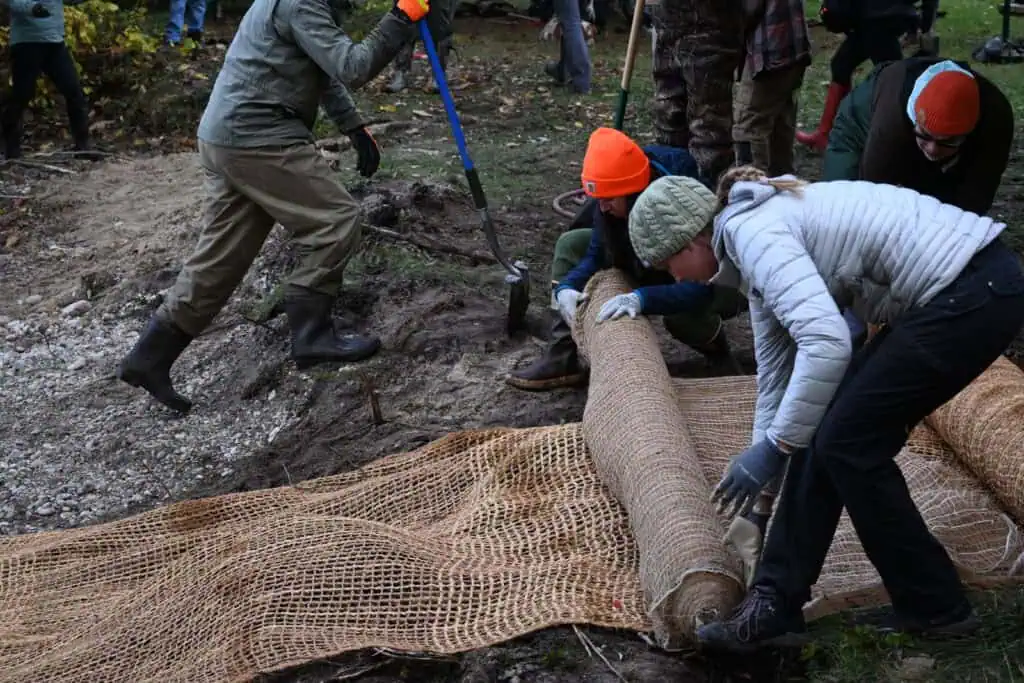
Biodegradable coconut fiber blankets were layered with sand and soil, then secured with stakes to hold the materials in place. These blankets help protect exposed soil from erosion while allowing vegetation to grow through them.
Over time, the coconut fibers will naturally break down as the plants establish stronger root systems.
4. Planting Native Vegetation
Native plants and live stakes were installed throughout the restored area to help stabilize the shoreline over the long term. Live stakes are cuttings from native woody shrubs that can develop roots and new branches when planted directly into moist soil.
As the vegetation becomes established, its root systems will help hold soil in place and strengthen the shoreline. A diversity of native plants also provides valuable habitat for pollinators, birds, and other wildlife.
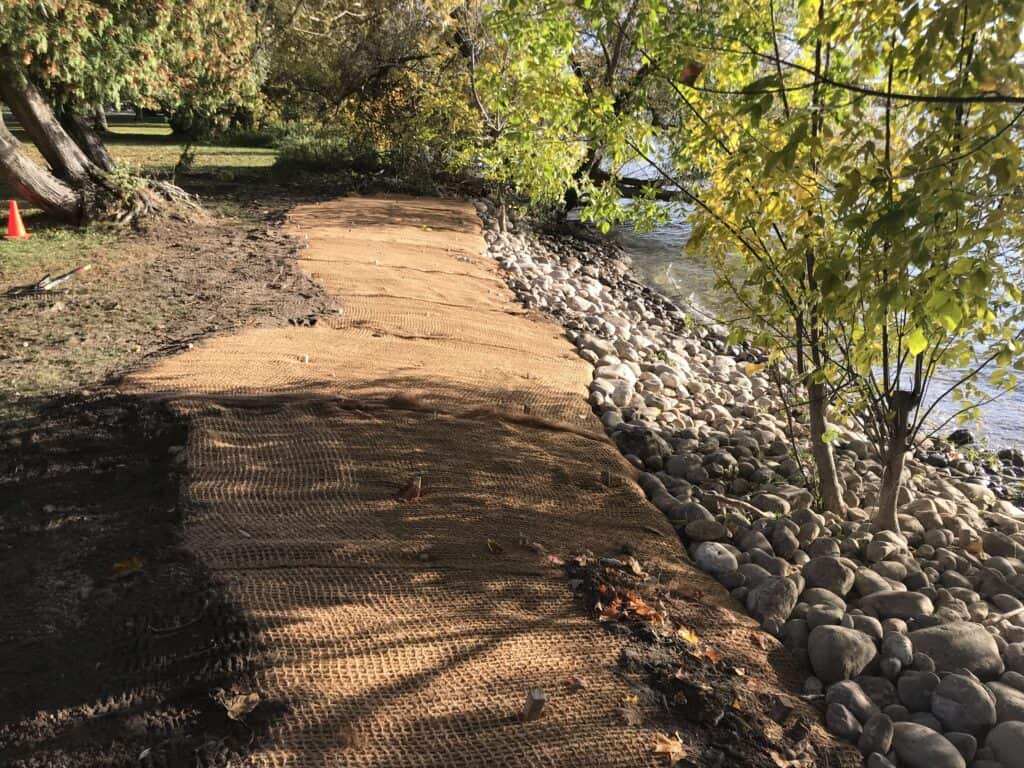
Together, the stone foundation, coconut fiber blankets, and native vegetation provide immediate erosion protection and longer-term stability as the restored shoreline becomes established.
A Living Demonstration for Park Visitors
Aloha State Park welcomes large numbers of visitors who come to enjoy Mullett Lake. The restored shoreline will serve as a demonstration area, allowing visitors to observe how native vegetation and natural erosion-control techniques can protect the lake while creating habitat.
As the plants become established, visitors will be able to see how the shoreline changes and develops over time.
Supporting Watershed Protection Goals
This project helps implement recommendations from the Mullett Lake Watershed Management Plan, which identifies shoreline erosion and sediment and nutrient runoff as concerns for the watershed.
The plan recommends restoring eroding shorelines using best management practices and promoting the use of Certified Natural Shoreline Professionals.
By combining on-the-ground restoration, professional training, and public education, the Aloha State Park project advances these goals while providing a model for similar projects throughout northern Michigan.
Project Funding and Partners
This restoration and training project was supported through the Michigan Department of Environment, Great Lakes, and Energy (EGLE) Nonpoint Source Program, which helps communities address polluted runoff, reduce erosion, and protect water quality.
The project was completed through collaboration with the Michigan Natural Shoreline Partnership, Habitat Landscape, Inc., Michigan Department of Natural Resources Parks Division, Mullett Area Preservation Society (MAPS), Michigan State University Extension, and Michigan Lakes and Streams Association.
This project has been funded wholly or in part through Michigan Department of Environment, Great Lakes, and Energy’s (EGLE) Nonpoint Source Program. The contents of the document including any images, video, text, or other content created by generative artificial intelligence tools, do not necessarily reflect the views and policies of EGLE, nor does EGLE endorse trade names or recommend the use of commercial products mentioned in this document.