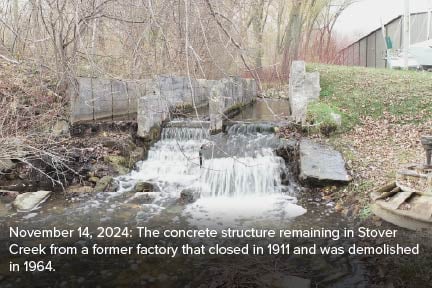
A major restoration project on Stover Creek, just south of Charlevoix, has reached an important milestone with the removal of a concrete dam that has disrupted the creek for decades. Located approximately 375 feet upstream from Lake Charlevoix, the dam prevented fish and other aquatic organisms from moving freely between the lake and upstream habitat, altered natural streamflow, and contributed to sediment buildup and flooding concerns.
Led by the Watershed Council, the project is the result of years of planning, engineering, monitoring, and collaboration with property owners and project partners. The dam was identified as a restoration priority in the 2012 Lake Charlevoix Watershed Management Plan, and a 2017 engineering study confirmed that removal would benefit both the ecosystem and public safety.
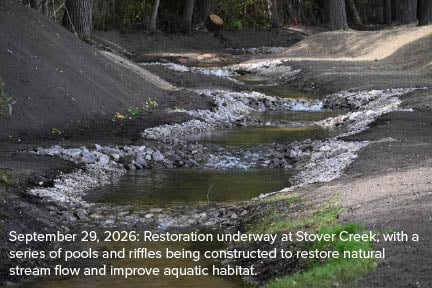
Construction began in late September, with crews removing the approximately 13-foot-wide, 36-foot-long concrete structure. Restoration work also includes reshaping the stream channel, adding stone and woody habitat, and planting native vegetation to stabilize the banks and floodplain.
The restored creek will provide improved fish passage, more natural sediment movement, and better conditions for aquatic life. Removing the dam will also reduce flooding risks associated with debris accumulation and eliminate the possibility of a sudden release of sediment trapped behind the structure.
The Watershed Council has monitored Stover Creek for nearly two decades, documenting poor conditions in its aquatic macroinvertebrate community. Continued monitoring will help track how the stream responds to restoration, while future fish assessments by the Michigan Department of Natural Resources will evaluate changes in fish distribution.
This project was made possible through support from the Michigan Department of Natural Resources Fisheries Habitat Grant Program, Charlevoix County Community Foundation, Irish Boat Shop, Lake Charlevoix Association, private donors, and the Michigan Department of Environment, Great Lakes, and Energy’s Nonpoint Source Program, with funding from the U.S. Environmental Protection Agency.