
Wake Boating in Northern Michigan
Understanding Wake Surfing and Protecting Our Waters
Wake surfing has become an increasingly popular way to enjoy Northern Michigan’s lakes. However, where and how it occurs matters. Research over the past several years has improved our understanding of how large, surf-style wakes interact with lake ecosystems and shorelines.
The information below summarizes current research and recommendations to help protect the lakes we all enjoy.
What is a Wake Boat?
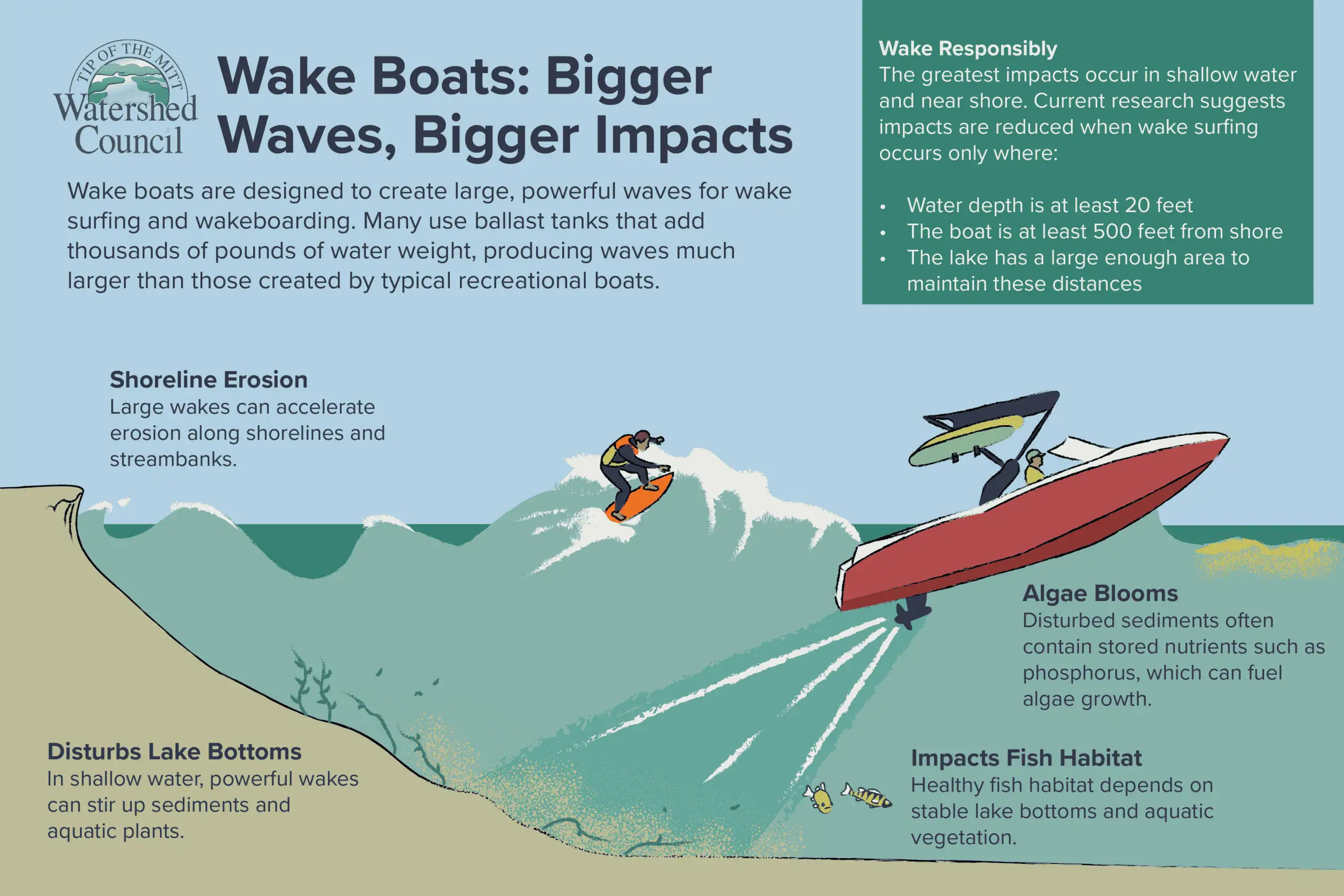
A wake boat is a specialized motorboat designed to create large waves for wake surfing and wakeboarding. Unlike traditional recreational boats, wake boats often use ballast tanks, which fill with water and can add thousands of pounds of weight to the boat. This additional weight, combined with specially designed hulls and wake-shaping devices, creates larger and more powerful waves.
These waves allow riders to surf behind the boat without being directly pulled by a rope. However, the same characteristics that create ideal surfing conditions can also increase environmental impacts if wake surfing occurs in areas that are too shallow or too close to shore.
How Can Wake Surfing Impact Lakes?
Shoreline Erosion
Large wakes contain substantial energy. When these waves reach shore, they can:
- Accelerate erosion of shorelines and streambanks
- Damage native vegetation that helps stabilize shorelines
- Increase sediment entering the water
These concerns are especially important during periods of high water and following flood events, when shorelines may already be saturated and vulnerable to erosion. Learn more about shoreline erosion.
Sediment Resuspension
In shallow water, powerful waves and propeller turbulence can stir up bottom sediments. This process, known as sediment resuspension, can:
- Reduce water clarity
- Block sunlight from reaching aquatic plants
- Alter lake-bottom habitats
Nutrient Release and Algal Growth
Lake sediments often store nutrients, including phosphorus. When sediments are disturbed:
- Nutrients can be released into the water column and contribute to algae growth.
- Excessive algae can deplete oxygen and, in some cases, release toxins.
Fish and Wildlife Habitat
Nearshore areas are among the most productive habitats in a lake. These areas provide:
- Fish spawning habitat
- Nursery areas for young fish
- Habitat for aquatic insects and amphibians
- Feeding areas for waterfowl and other wildlife
Repeated wave action and disturbance of aquatic vegetation can alter these important habitats.
Aquatic Invasive Species
Many wake boats use ballast tanks that fill with water to create larger waves. If not properly cleaned and drained, ballast tanks can potentially transport invasive species. As with all watercraft, boaters should always Clean, Drain, and Dry their equipment before moving between waterbodies. Learn more.
Current Recommendations for Wake Surfing
Recent scientific studies have examined how wake surfing affects shorelines and lake bottoms. Based on current research and existing state regulations, we recommend wake surfing only in areas that meet all three of the following criteria:
Water Depth: At Least 20 Feet
Research from the University of Minnesota indicates that operating in water deeper than 20 feet can help reduce interactions between boat-generated energy and the lake bottom. Learn more.
Distance from Shore: At Least 500 Feet
Maintaining greater distances from shore allows waves to dissipate before reaching sensitive shorelines and nearshore habitats. A 2025 Lake Beulah Wave Impact Study and a Study of waves produced by recreational boats by the University of Minnesota recommend a distance of 500 feet or more from the shore to reduce safety and erosion risks from wake boats.
Adequate Wake Zone Size
A lake should have a sufficiently large area that can consistently meet the depth and distance recommendations. We considered lakes to have suitable wake zones if they contain at least 50 acres of water meeting the above criteria, consistent with existing wake surfing regulations in Vermont, New Hampshire, and Tennessee laws.
Wake Surfing Recommendations for Lakes in Our Service Area
Lakes within the Watershed Council’s service area have been evaluated using the above criteria. Use caution even on lakes that meet all the criteria. Review what sections of the lake are 500 feet from shore before you go, and if water levels are high, please consider enjoying the lake in a different way, as shorelines will be even more vulnerable to erosion. Check with local sheriff departments for current restrictions.
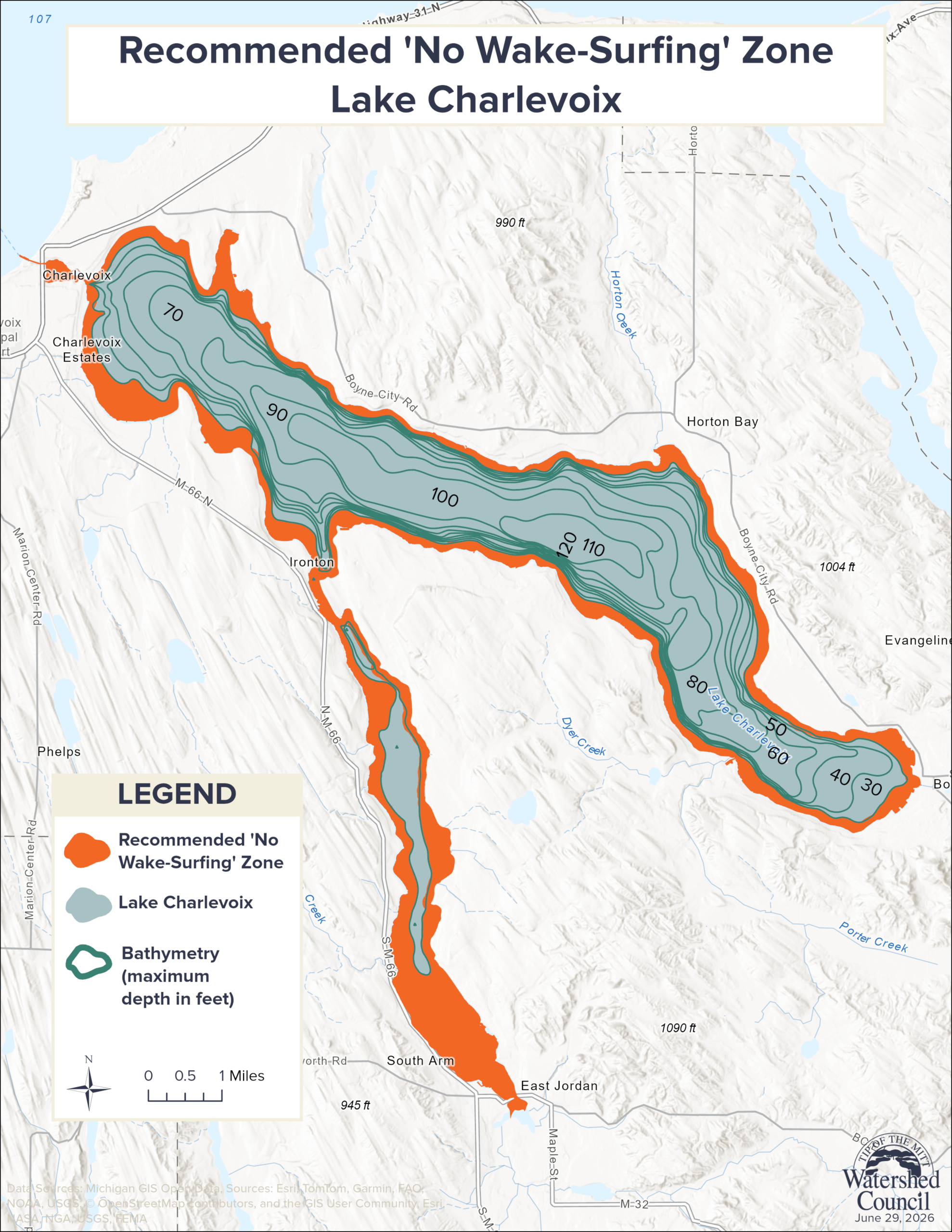
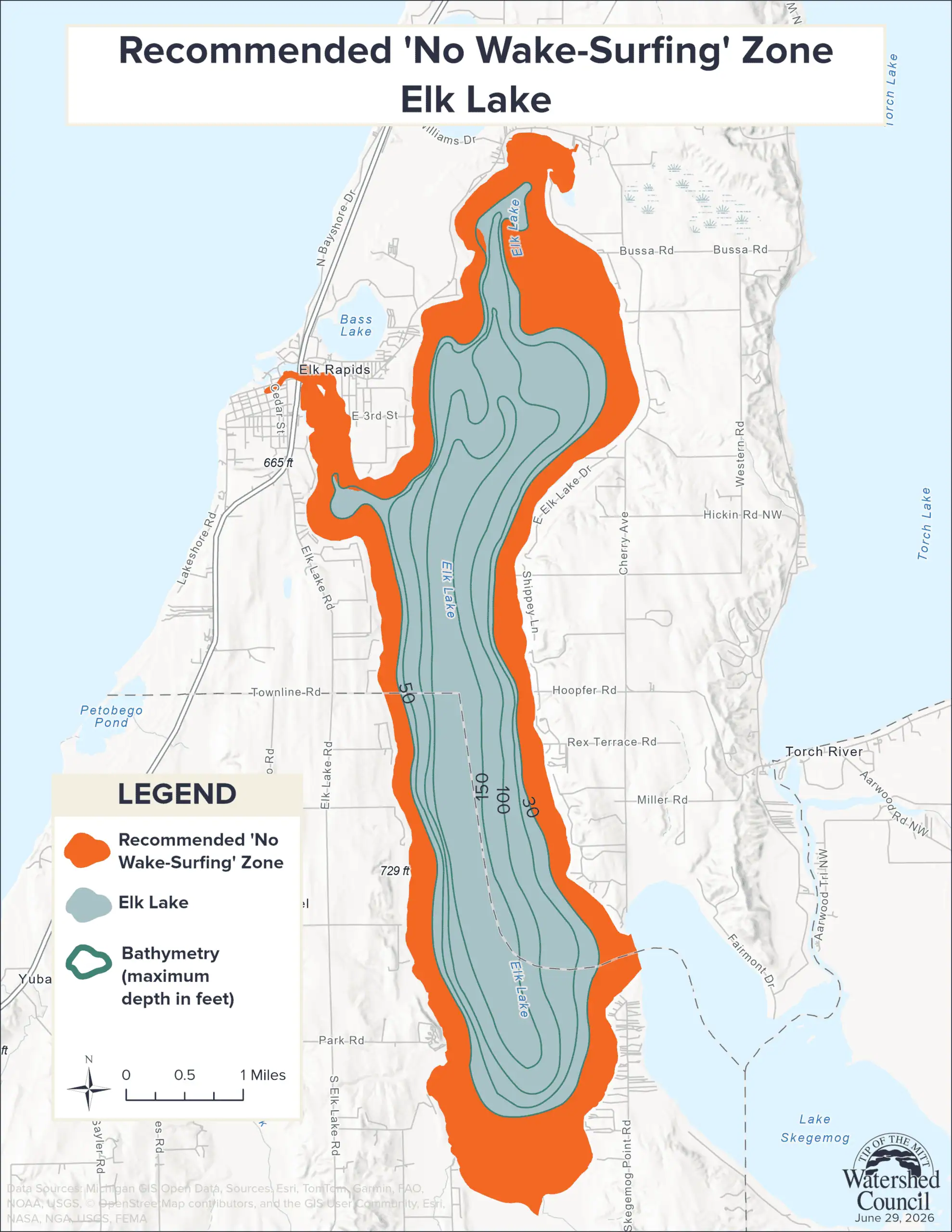
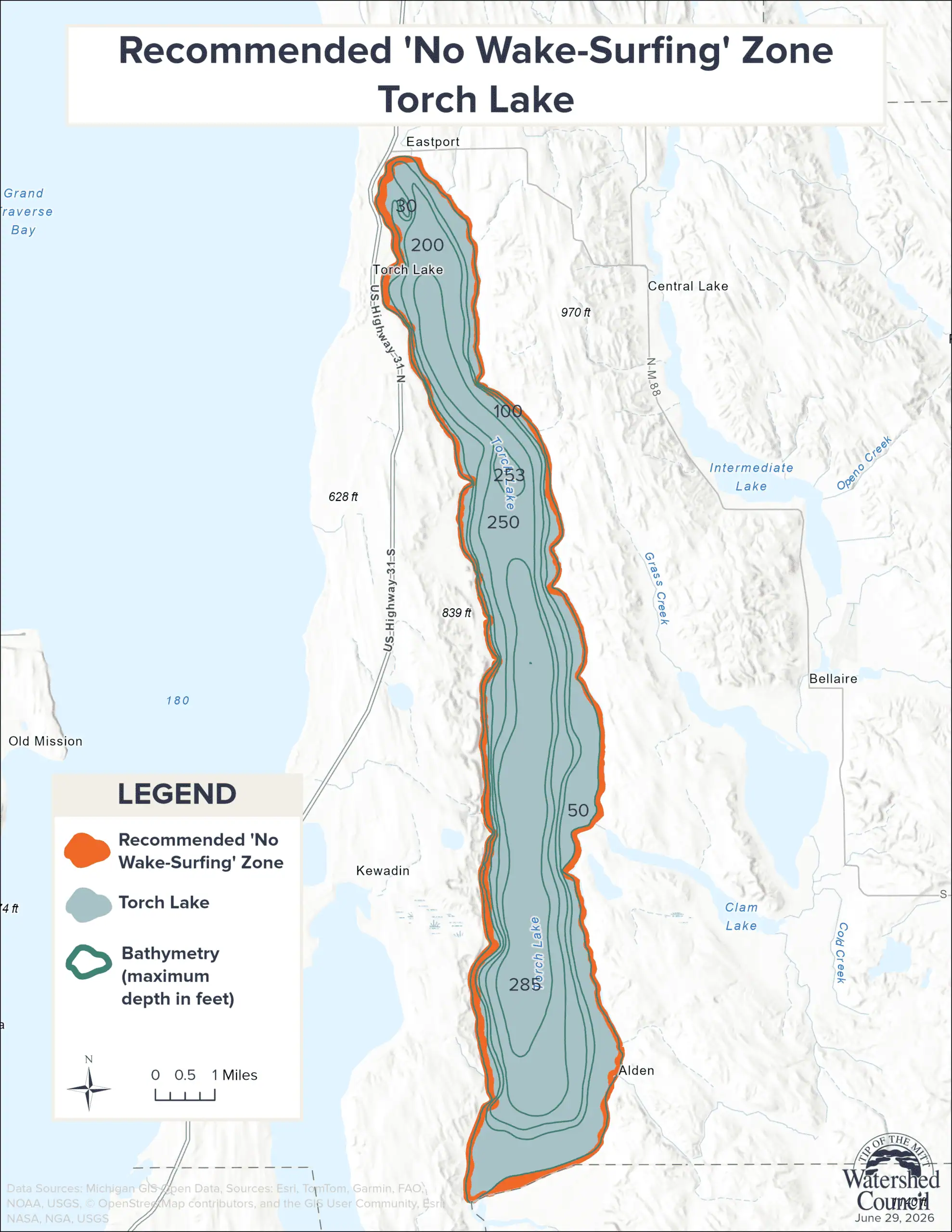
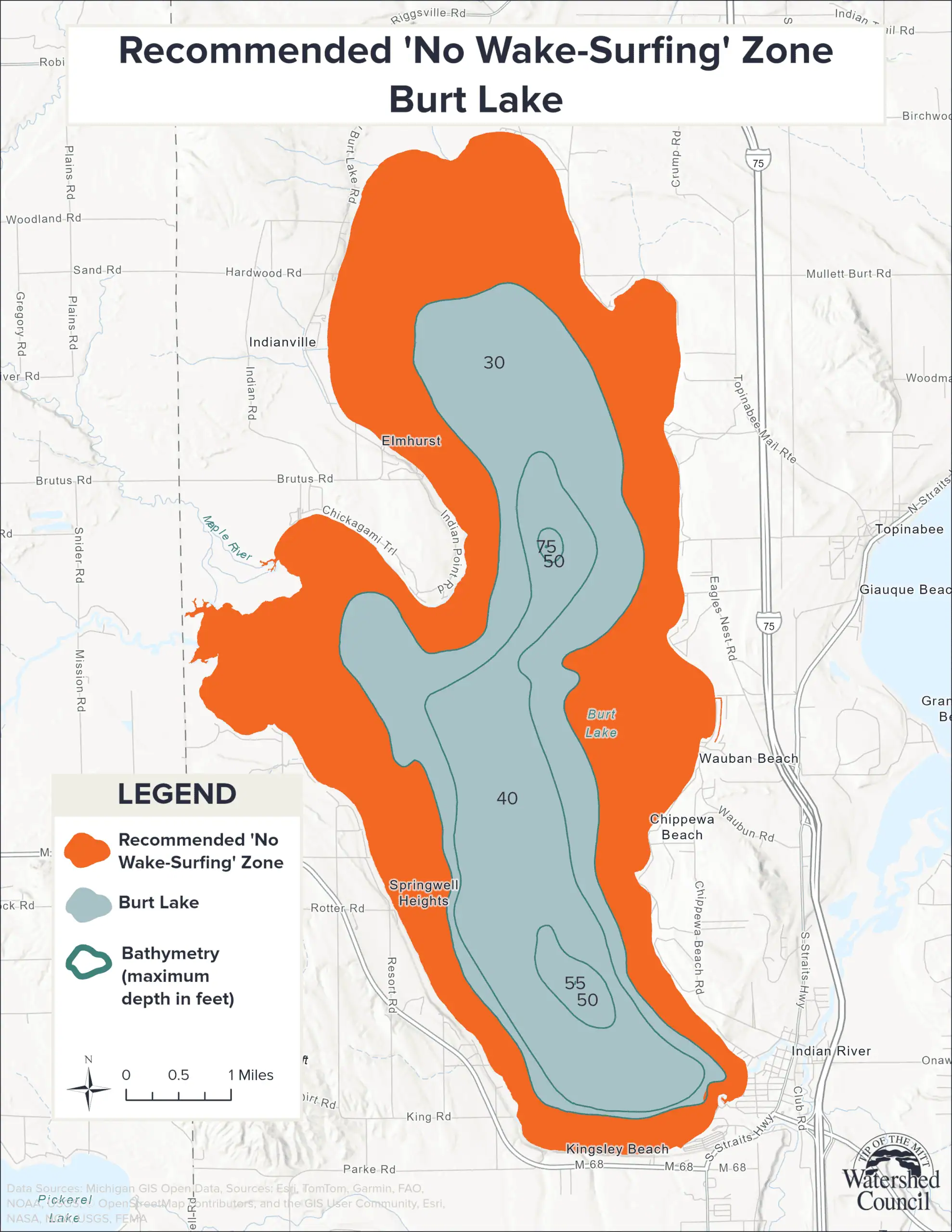
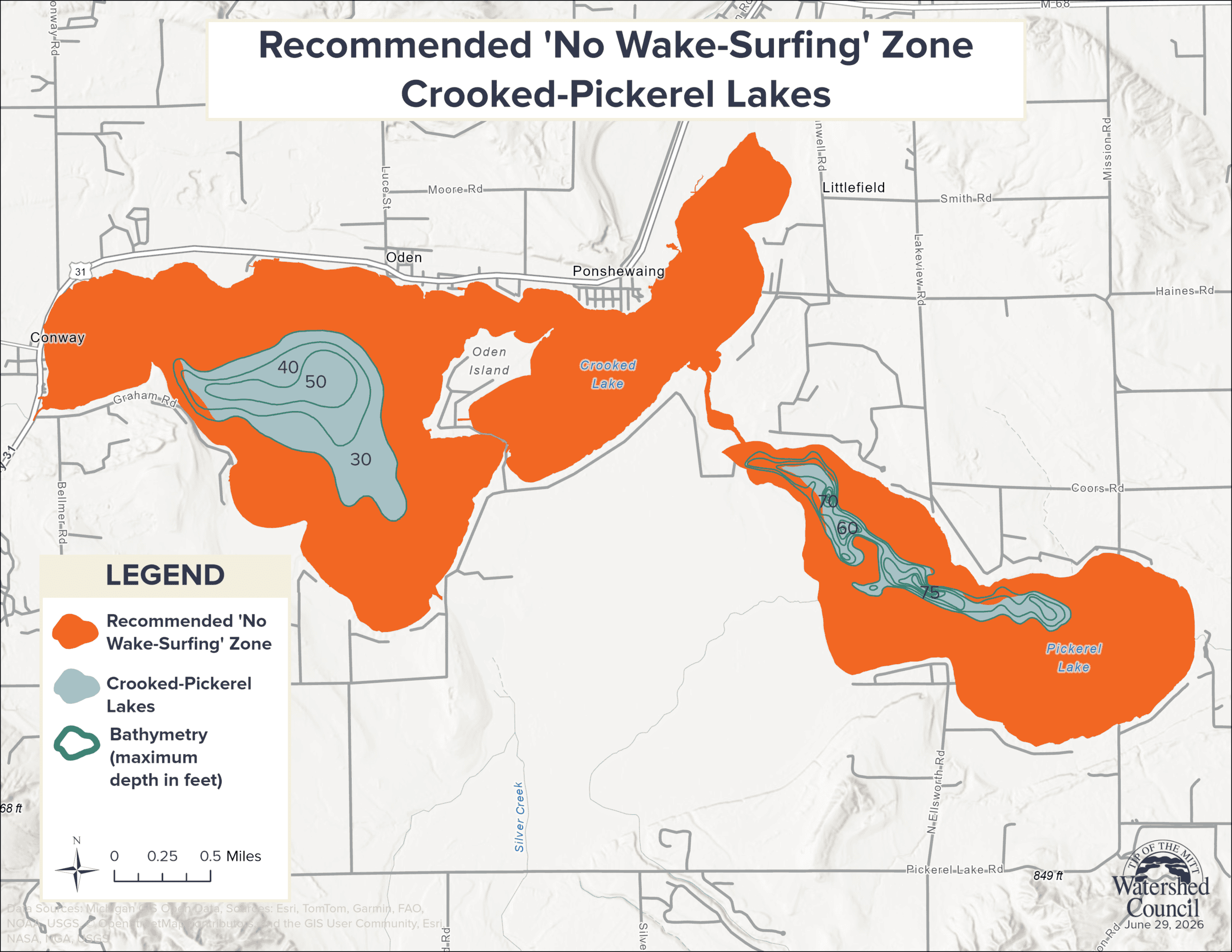
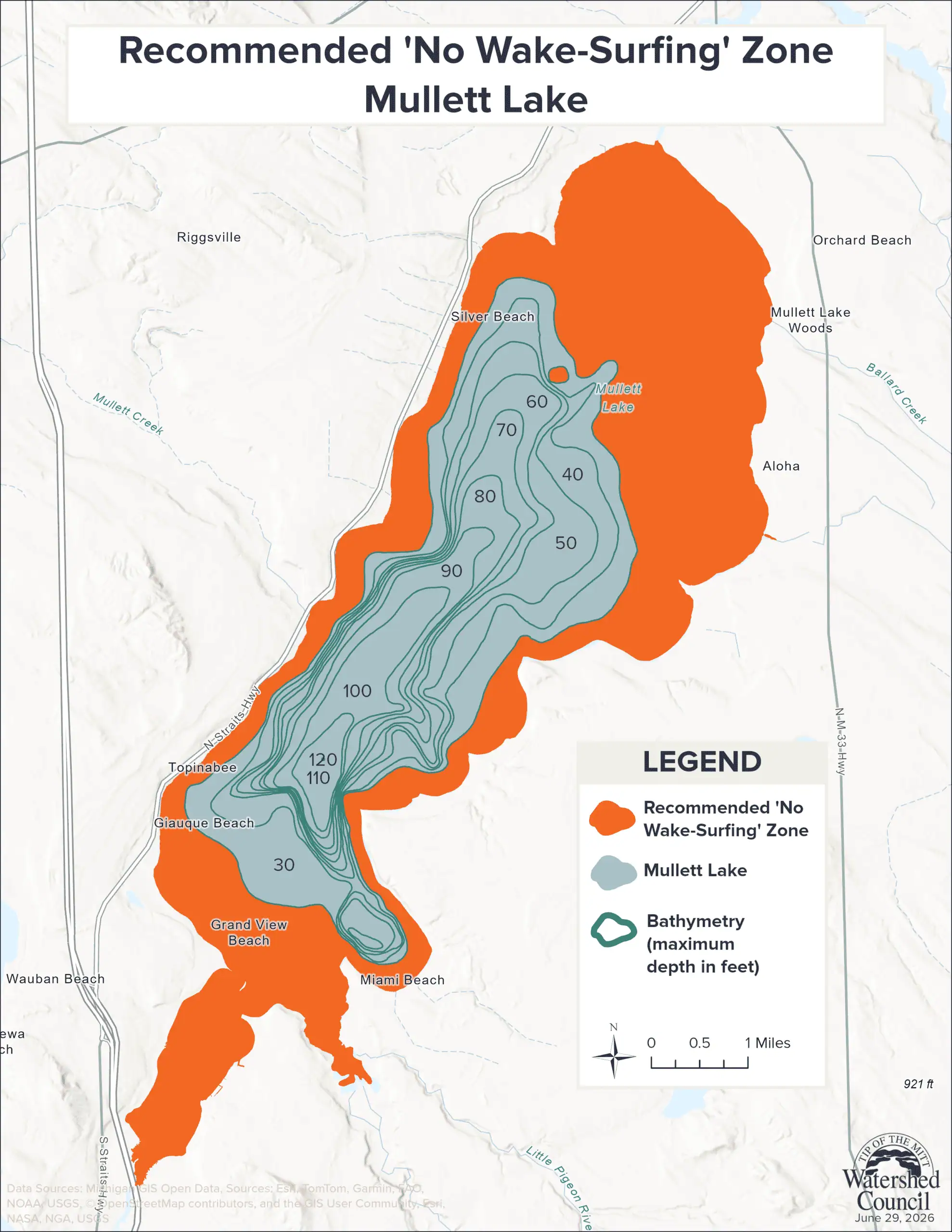
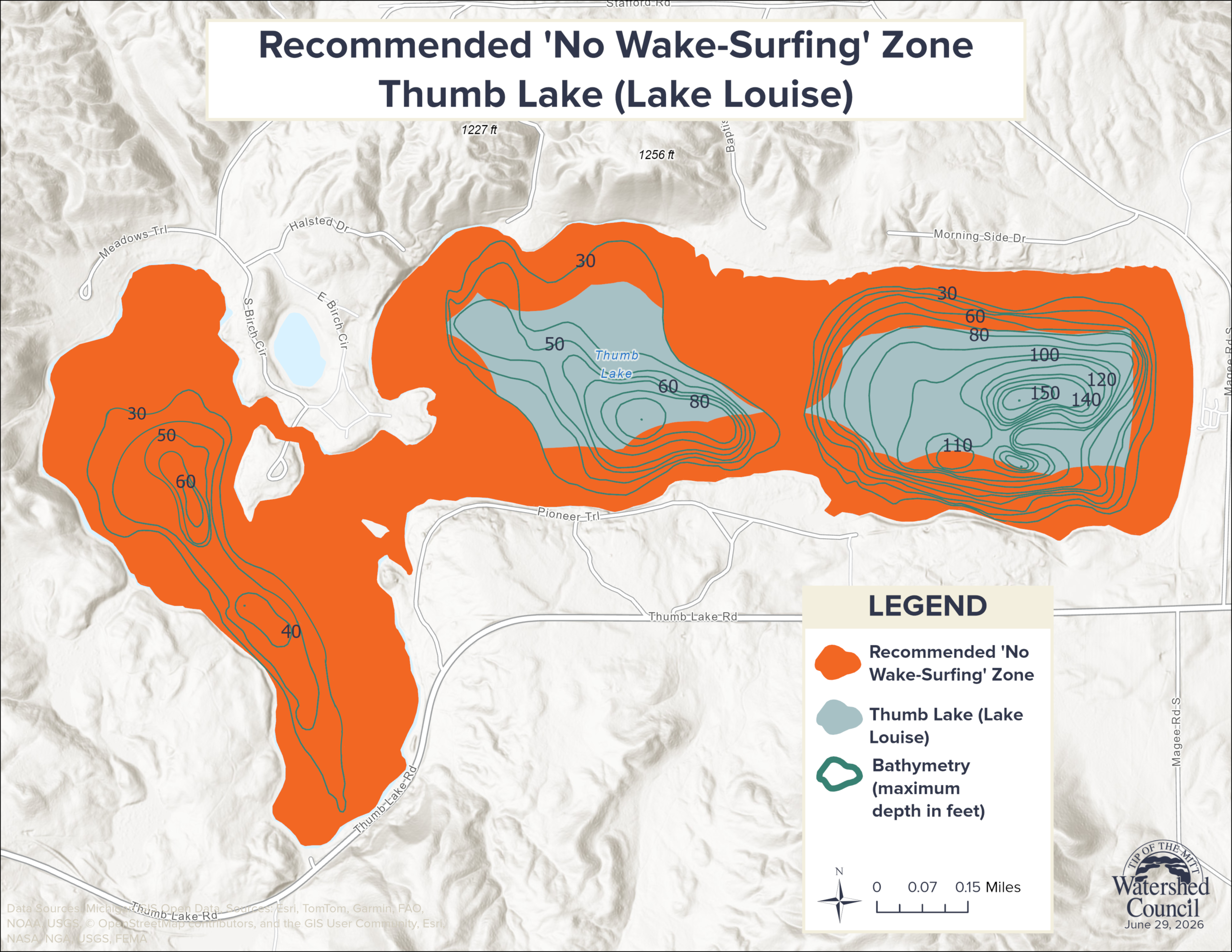
Not all areas on lakes that meet the criteria are acceptable for wake surfing. Please review the wake zone maps linked to lakes below before recreating. Additionally, always follow posted no wake signage.
No
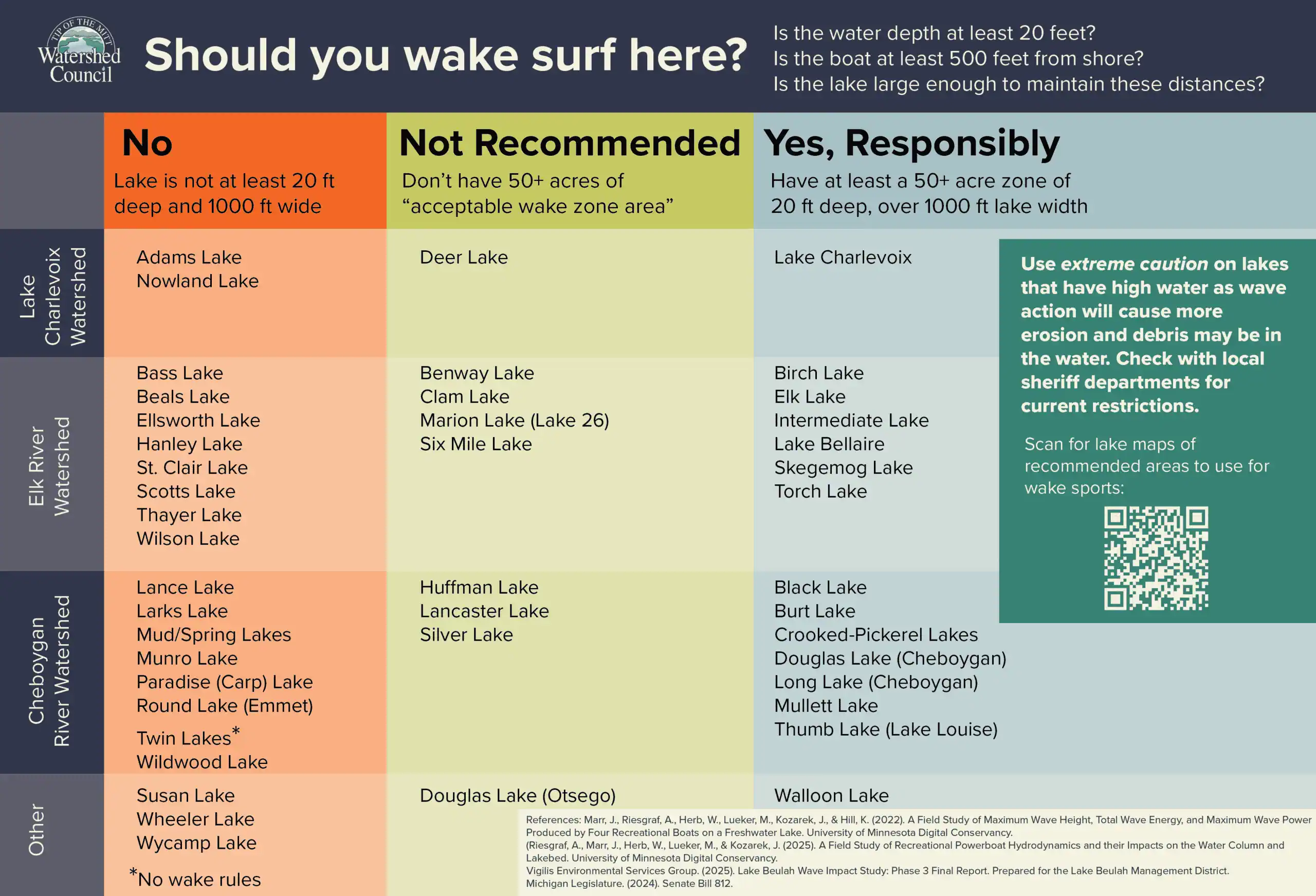
These lakes are not at least 20 feet deep and 1000 feet wide.
- Adams Lake
- Nowland Lake
- Bass Lake
- Beals Lake
- Ellsworth Lake
- Hanley Lake
- St. Clair Lake
- Scotts Lake
- Thayer Lake
- Twin Lakes*
- Wilson Lake
- Lance Lake
- Larks Lake
- Mud/Spring Lakes
- Munro Lake
- Paradise (Carp) Lake
- Round Lake (Emmet)
- Wildwood Lake
- Susan Lake
- Wheeler Lake
- Wycamp Lake
Not Recommended
These lakes do not have suitable 50+ acres of accaptable wake surfing area.
- Deer Lake
- Benway Lake
- Clam Lake
- Marion Lake
- Six Mile Lake
- Huffman Lake
- Lancaster Lake
- Silver Lake
- Douglas Lake (Otsego)
Acceptable
These lakes meet the recommended depth and distance criteria, but it’s important to know which area of the lake are suitable. Click to view a map of suitable wake zones.
- Lake Charlevoix
- Birch Lake
- Elk Lake
- Intermediate Lake
- Lake Bellaire
- Skegemog Lake
- Torch Lake
- Walloon Lake
- Black Lake
- Burt Lake
- Crooked-Pickerel Lakes
- Douglas Lake (Cheboygan)
- Long Lake (Cheboygan)
- Mullett Lake
- Thumb Lake (Lake Louise)
*Special no wake rules